
Turning conflict into conservation
Along the boundary of many Game Reserves, neighbouring families live with the daily reality of elephant conflict. Crop damage, broken fencing, and safety risks place huge pressure on already vulnerable households. This project offers a different way forward.
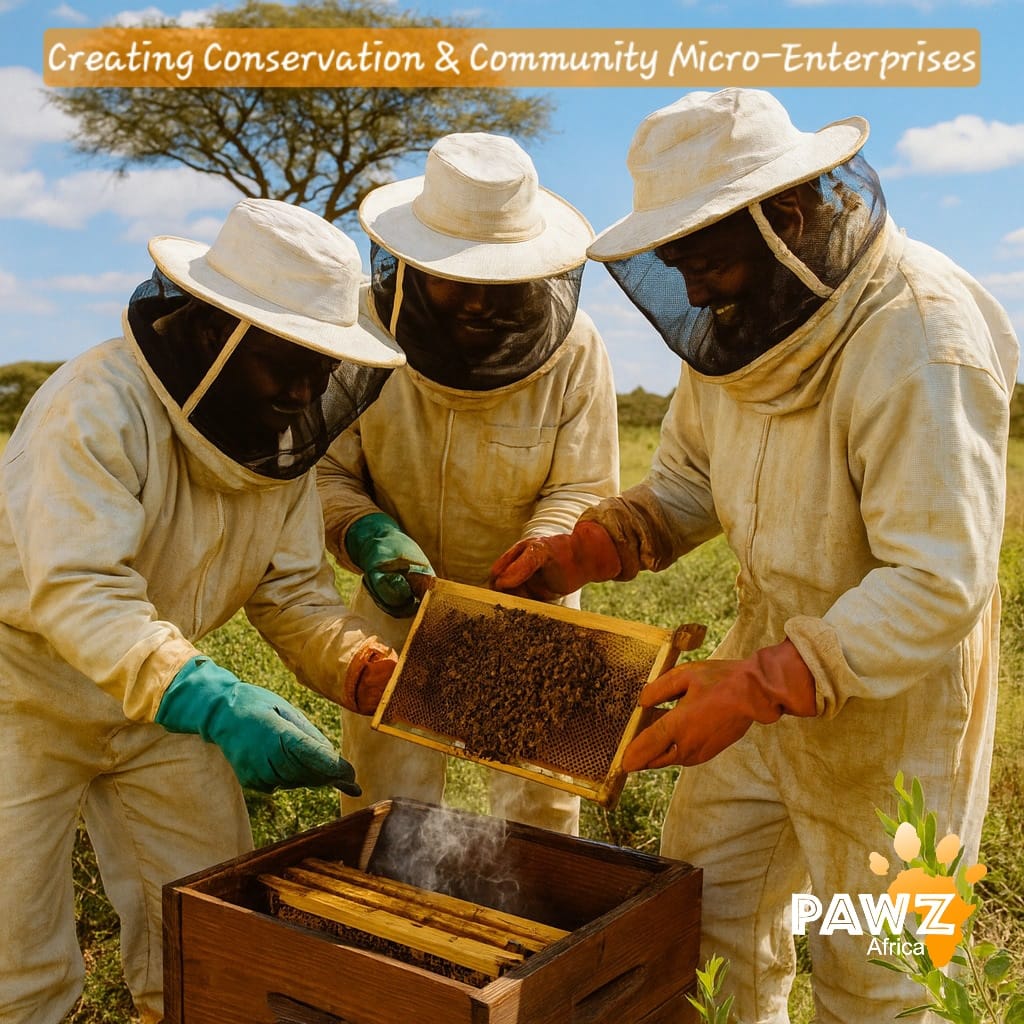
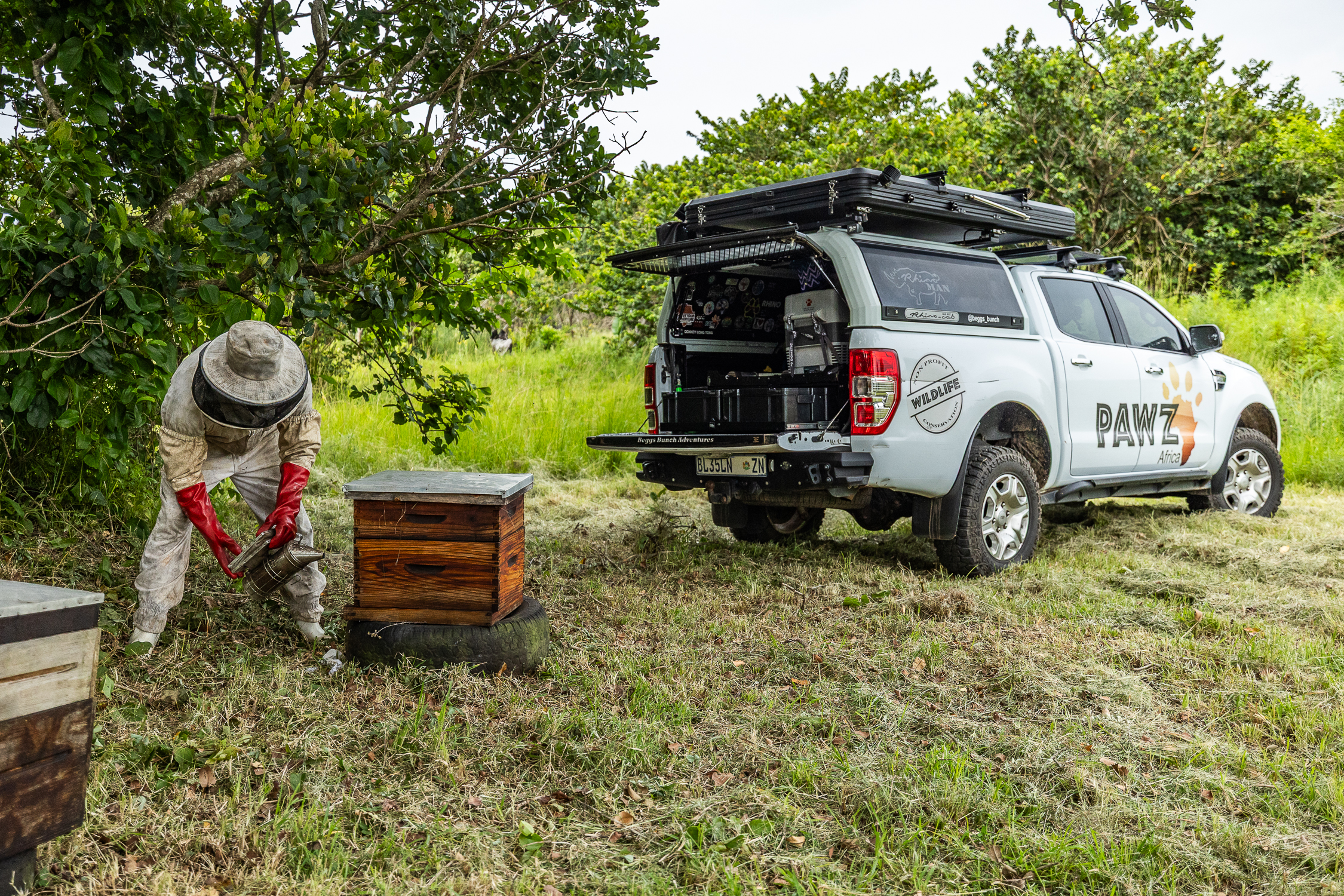
By establishing beehive fences and training local community members as beekeepers, the project helps deter elephants from high-conflict areas while creating income through honey and beeswax production. It is a practical conservation solution that protects both people and wildlife.
PAWZ supports this project through governance, fund administration, monitoring, reporting, and impact accountability. Donor funds are ring-fenced to approved workstreams, released against milestones, and tracked through clear evidence and reporting. This gives funders confidence while allowing the field team to stay focused on delivery.
The field side of the project is led by Gareth Roberts, a conservationist, beekeeper, and environmental manager, working alongside community groups, the reserve managements, and project partners.
Why it matters
Too often, communities living next to conservation areas bear the cost of wildlife without seeing enough of the benefit. This project helps shift that reality.
Beehive fences offer a humane, low-cost deterrent that can reduce elephant raids while creating a recurring source of income. Honey, beeswax, pollination, skills development, and enterprise formation all become part of the conservation story. When people start earning because nature thrives, stewardship becomes stronger and more lasting.
What the project aims to achieve
Over the 24-month scale-up phase, the project aims to:
- Install and maintain more than 100 hives across strategic fence-line clusters
- Maintain at least 85% active and healthy hives
- Achieve at least 95% fence continuity at managed sites
- Reduce recorded elephant conflict incidents at targeted points by 60 – 70%
- Produce at least 1,000kg of traceable, quality-assured honey
- Train 50 beekeepers, with strong inclusion of women and youth
- Help participating households earn meaningful supplementary income.
How it works
The project combines conservation deterrence with local enterprise.
Occupied beehive fences are installed at human-elephant conflict hotspots along the Reserve boundary. Local community members are organised into trained co-operatives that manage the hives, monitor activity, harvest honey, and participate in the growing value chain. The honey is then positioned for premium market opportunities, helping make the model sustainable beyond grant funding.
How you can support this project
There are several ways to get behind the Conservation & Community Bee Project
- Adopt a Hive
Help fund one working hive along the boundary line.
R5,000 - Train a Beekeeper
Support equipment, training, and skills development for a local participant.
R10,000 - Sponsor a Fence Cluster
Help establish a strategic section of beehive fence in a high-conflict area.
R25,000 - Fund the Bigger Vision
A total of R900,000 is needed to finance the two-year scale-up of the established Tembe pilot.
A model worth backing
The Conservation & Community Bee Project is simple, practical, and powerful. It protects crops without harming elephants. It creates livelihoods without exploiting nature. And it helps turn neighbouring communities into active participants in conservation, not just spectators to it.
This is what meaningful conservation looks like when people are part of the solution.
